Free Daily Gratitude Prompt Generator
Generate thoughtful gratitude prompts with Three Good Things mode
Practice gratitude in 2 minutes
Your entries are saved privately in your browser.
Three Good Things Exercise
Research by Dr. Seligman shows this practice increases happiness for up to 6 months. List 3 things that went well today and why.
Showing 10 most recent entries of total
Share Your Gratitude
 Loggd · by the makers of this tool
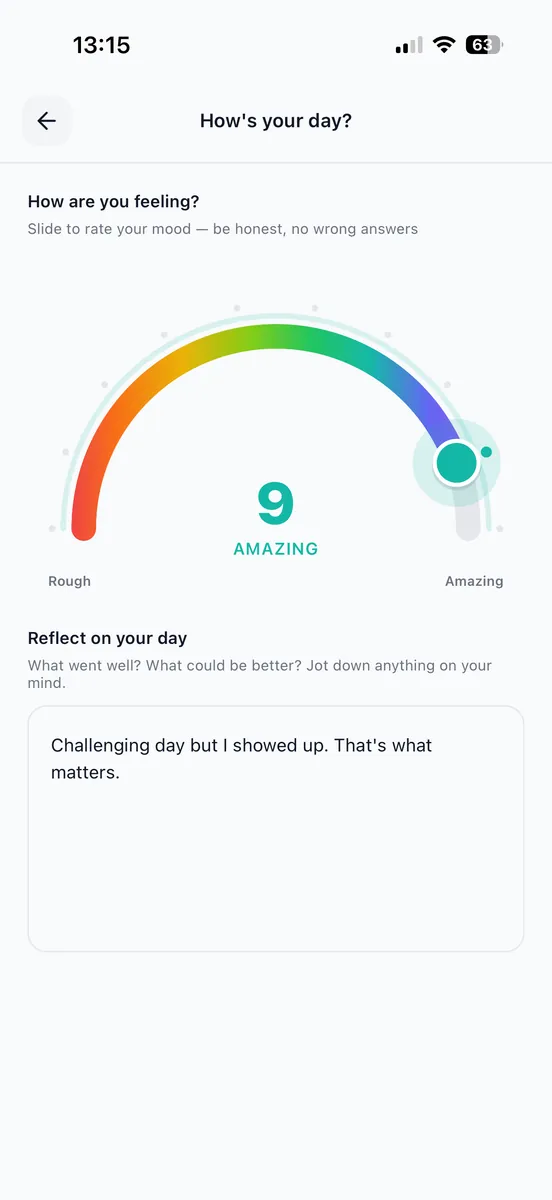
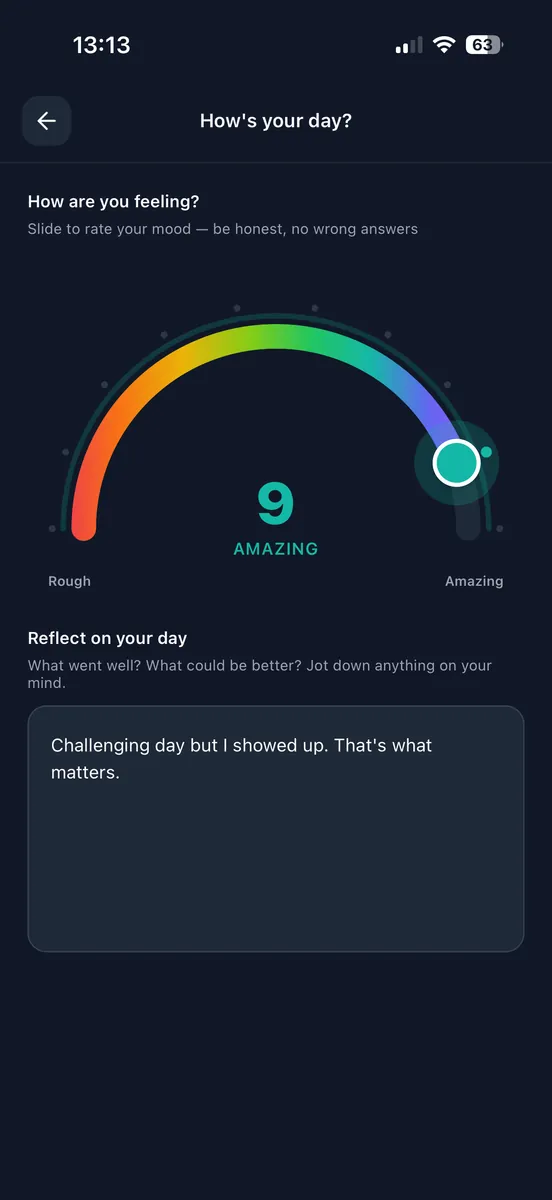
Write a short check-in every day.
The Loggd app asks how your day went and keeps every answer. It takes about a minute.




Free plan with no time limit. No credit card.


The Science of Gratitude
Gratitude practice is one of the most well-researched interventions in positive psychology. Studies consistently show that regularly expressing gratitude leads to measurable improvements in both mental and physical health. Unlike many self-help trends, gratitude journaling is backed by decades of scientific research.
The Three Good Things Exercise
Developed by Dr. Martin Seligman, the "Three Good Things" exercise (also known as "Three Blessings") is a cornerstone of positive psychology. Participants write down three things that went well each day and explain why they happened. Research published in American Psychologist found that this simple practice, done for just one week, increased happiness and decreased depressive symptoms for up to six months.
Benefits of Regular Gratitude Practice
- Improved Mental Health: Gratitude is associated with reduced depression, anxiety, and stress levels
- Better Sleep: Writing in a gratitude journal before bed can improve sleep quality and duration
- Stronger Relationships: Expressing gratitude strengthens social bonds and increases relationship satisfaction
- Enhanced Resilience: Grateful people are better able to cope with adversity and trauma
- Physical Health: Studies show grateful people exercise more, have fewer aches and pains, and report feeling healthier
- Increased Empathy: Gratitude helps reduce aggression and increase prosocial behavior
Tips for Effective Gratitude Journaling
- Be specific: Instead of "I'm grateful for my family," write "I'm grateful my daughter made me laugh at dinner tonight"
- Go for depth: Elaborate on why you're grateful rather than listing many surface-level items
- Include surprises: Unexpected events tend to elicit more gratitude than expected ones
- Write about people: Focusing on people rather than things produces stronger feelings of gratitude
- Be consistent: Daily practice for at least 2-3 weeks is recommended to see benefits
How to Use This Tool
-
1
Choose a prompt category (relationships, achievements, simple pleasures, growth, or health) or get a random prompt
-
2
Click "New Prompt" to generate a thoughtful gratitude question
-
3
Write your response directly in the text area below the prompt
-
4
Try "Three Good Things" mode for a research-backed daily practice
-
5
Save your favorite prompts to revisit later using the heart icon
-
6
Share beautiful gratitude cards on social media or download them
Frequently Asked Questions
Three Good Things is a positive psychology exercise developed by Dr. Martin Seligman. Each day, you write down three things that went well and reflect on why they happened. Research shows this simple practice, done consistently for just one week, can increase happiness and reduce depression for up to six months.
For best results, practice gratitude journaling daily, either in the morning to set a positive tone or in the evening to reflect on your day. Even 5-10 minutes is effective. Consistency matters more than duration - a brief daily practice is more beneficial than occasional long sessions.
Research shows gratitude practice can improve mental health, strengthen relationships, enhance empathy, improve sleep quality, boost self-esteem, and increase psychological resilience. Regular gratitude journaling has been shown to have effects comparable to some medications for depression.
Effective gratitude prompts are specific and encourage deep reflection rather than surface-level responses. They help you notice things you might overlook, explore relationships and experiences, and connect with positive emotions. Our prompts are designed to cover different life areas for a well-rounded practice.
Yes, all your entries, favorites, and history are saved locally in your browser using localStorage. This means your data stays private on your device and persists between sessions. Nothing is sent to our servers, ensuring complete privacy.
Morning gratitude sets a positive intention for the day ahead, helping you approach challenges with an appreciative mindset. Evening gratitude reflects on the day that passed, helping you recognize good moments you might have missed. Both are valuable - try each to see what resonates with you.
Related Tools
Loggd · by the makers of this tool
Track your life. See your year.
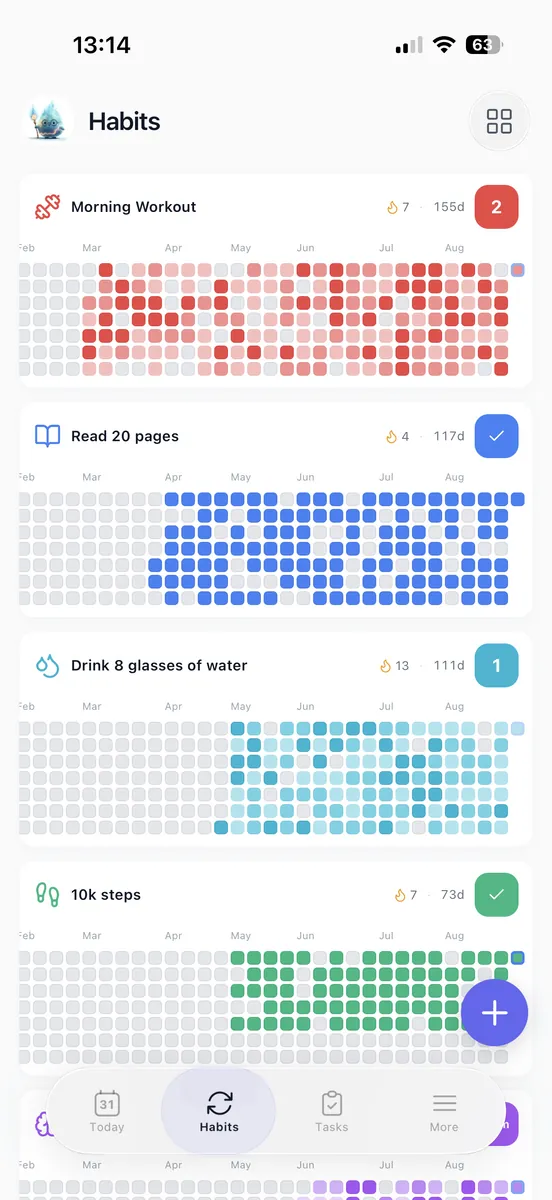
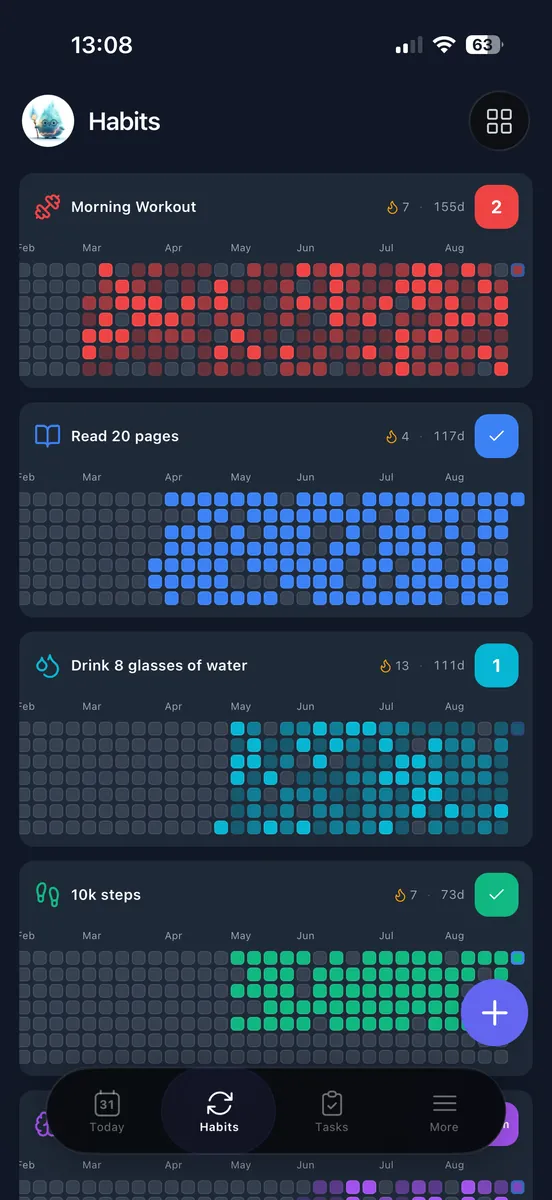
Loggd is a free app for your habits, tasks, goals and focus time.
- Check a habit and a square fills in. A year is 365 squares.
- Tasks, goals with milestones, and a focus timer in the same app.
- iPhone, Android and web. One account, the same data everywhere.
Free plan with no time limit. No credit card.